by
艺术家 Artists: 张继弛 Jichi Zhang
2026-09-04 – 2026-09-18 · 杭州 Hangzhou · L Gallery
这里不是出口。 This is not an exit.
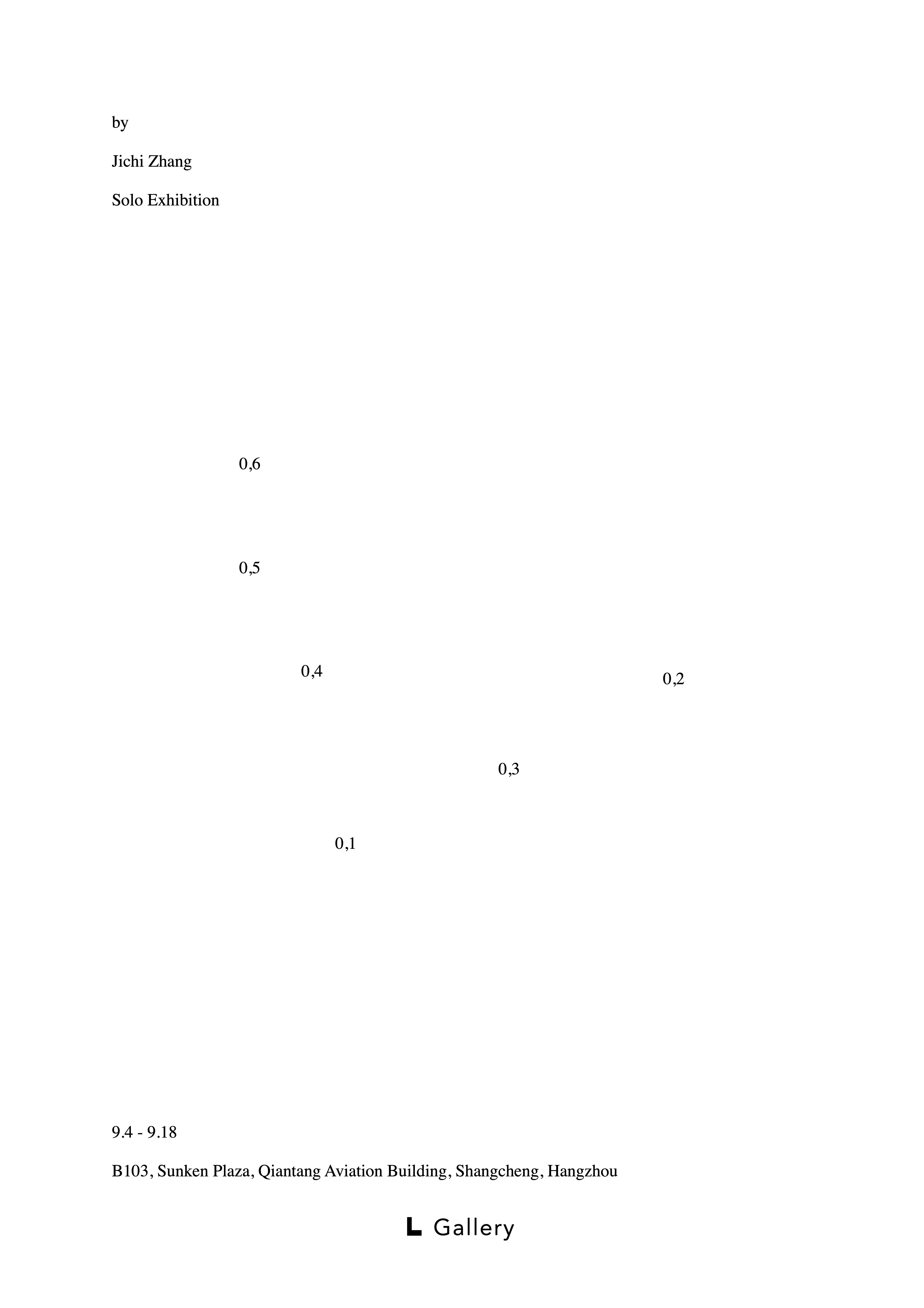
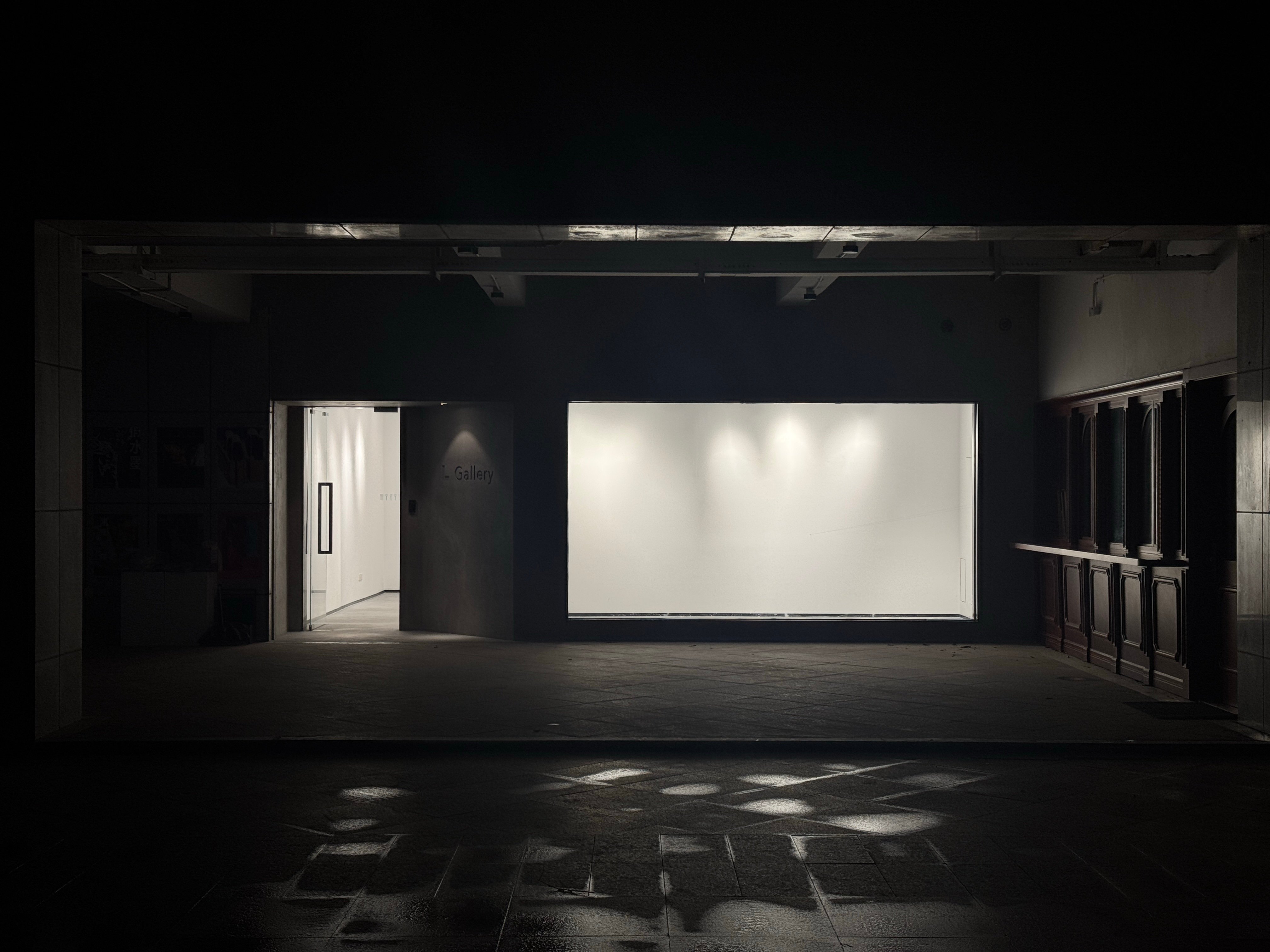
L Gallery 荣幸呈现张继驰全新个展 “by”。此次展览既延续了他此前的展览 “am” 与 “if”,同时也是一次对其工作路径的重新校准。
by,是在崩塌之后出现的。倘若意义已无法依靠自身完成闭合,那么,究竟还有什么仍在运作?问题不再是作品“是什么”,也不再是它“意味着什么”,而是:它究竟凭借什么得以继续维持。
by 是一个介词:一种细小的语法装置,将行动与方法、结果与程序、延续与手段连接起来。张继驰并不把这个词视为语言中的偶然细节,而是把它作为一种结构性的条件来对待。在这次展览中,by 指向那些最小化的程序:表面如何被维持完整,缝隙如何被控制在可处理范围内,暴露如何被延缓,却从未真正得到修复。展览转向“维护”,但并非将其视为一种美德;它把维护理解为一种充满争议的关系:它分配可见性,延长功能的持续,同时也常常遮蔽自身权力得以成立的条件。
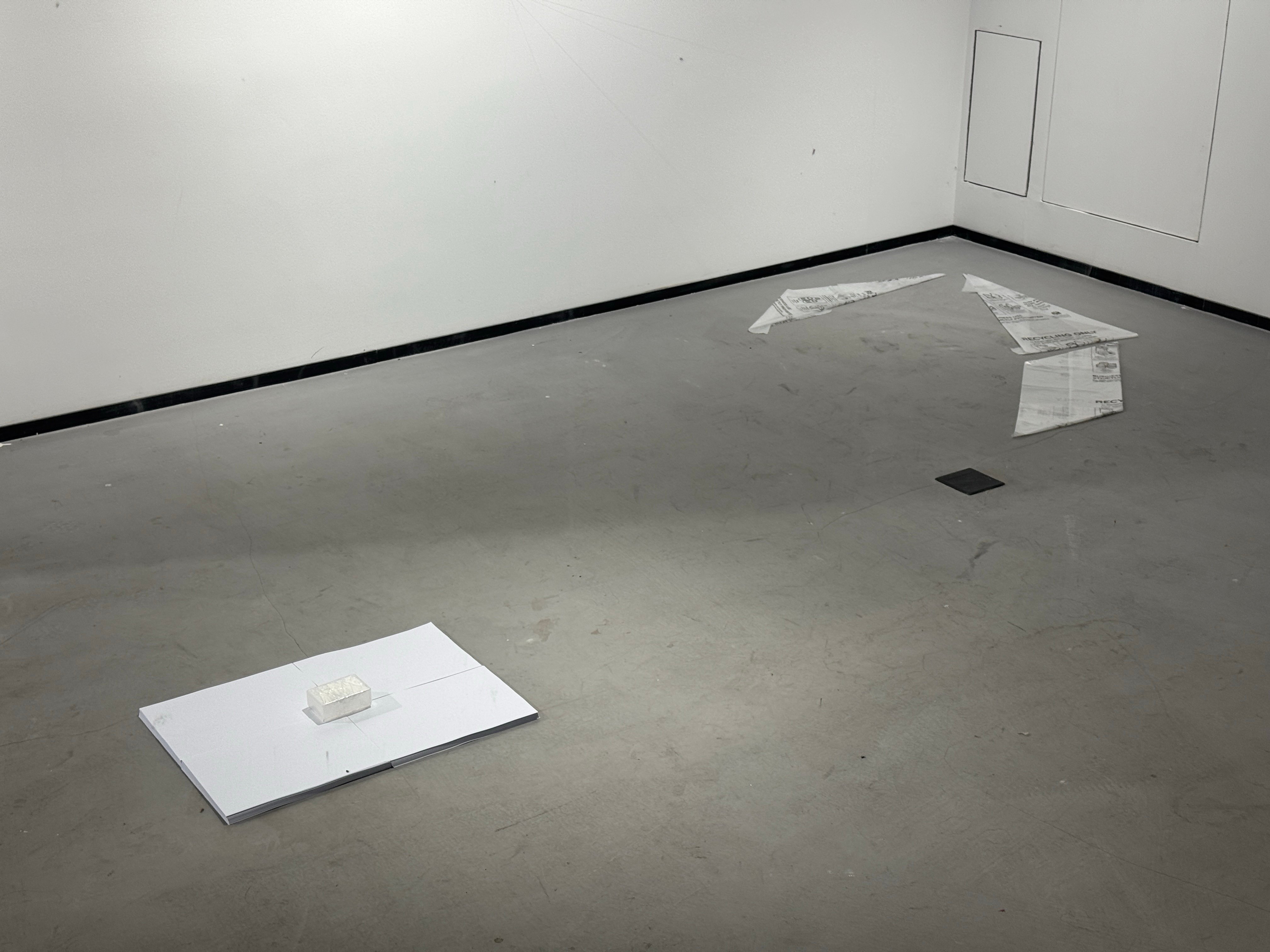
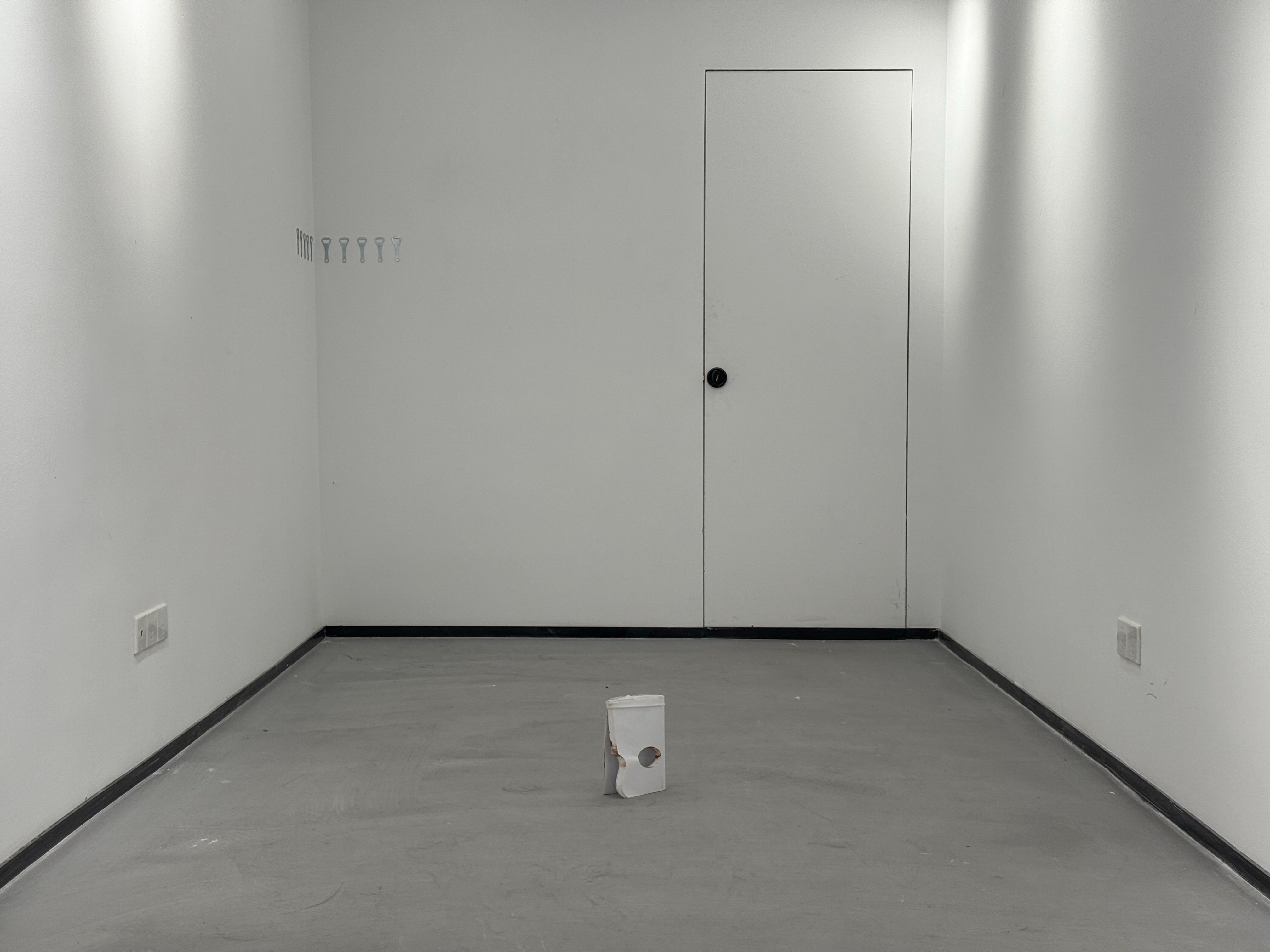
作品从一组熟悉却极少被真正审视的操作出发。这些操作来自建筑维护、物流系统与日常修补:填补、封缝、修补、粘贴、包裹、标记与覆盖。它们通常滞留在世界的背景之中,是低可见、低地位的动作,却使其他事物得以保持可辨识。张继驰将这些动作抽离出来,并拒绝它们通常所附带的“成功叙事”。在这里,维护既不作为一种中性的技术性善,也不作为一种安静而高尚的照护形式出现。相反,它显现为一种结构:它稳定某些事物,同时把别处失稳的后果不断向后推迟。
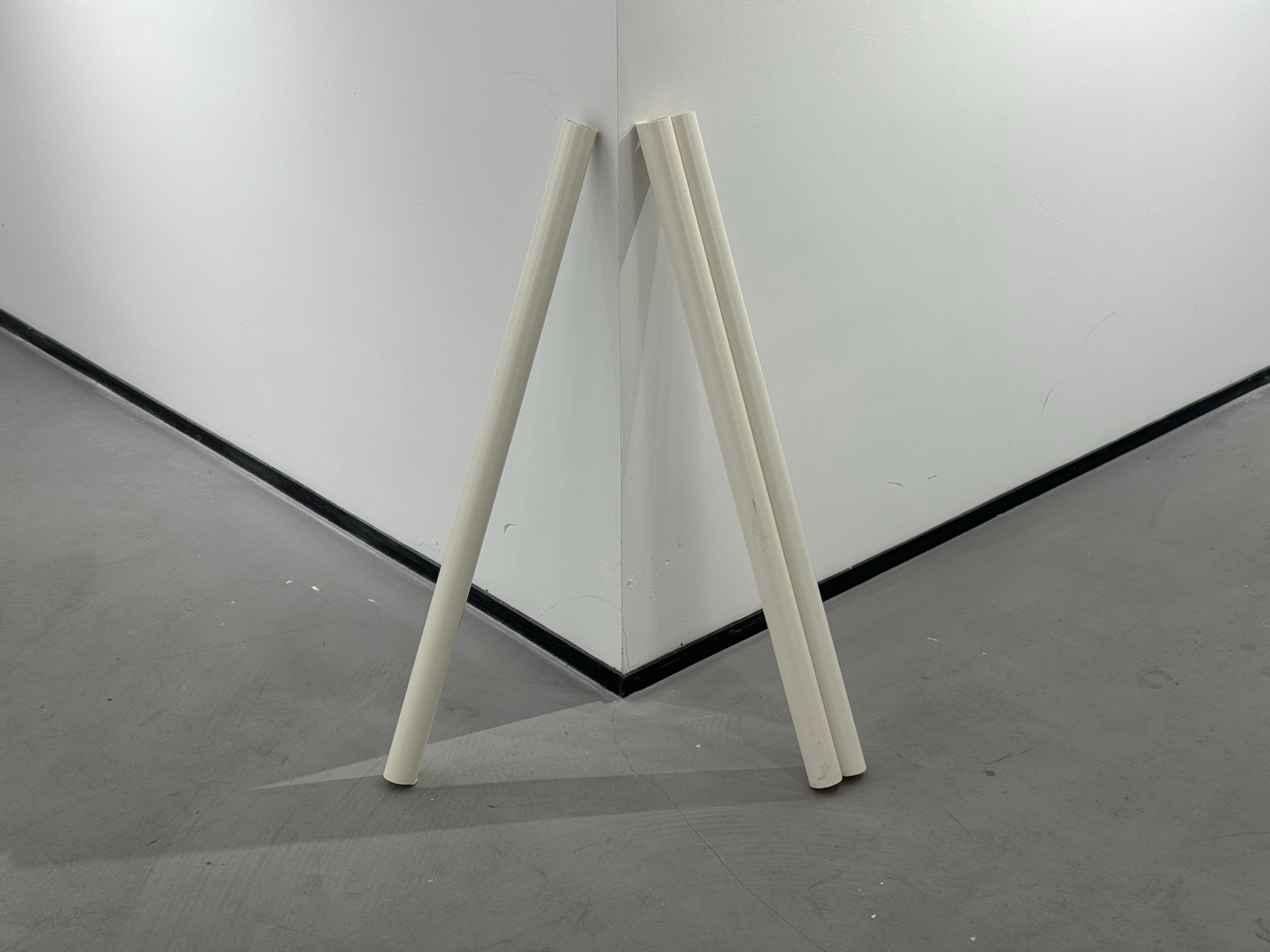
照护并不等于完成。胶带会起皱、翘起、裹入空气、吸附灰尘,并留下残胶。填充物会压缩、位移、渗漏、堆积,并以不均匀的方式沉降。那些本应表现为“封闭”或“闭合”的东西,最终反而表现为证据。保护在这里并不是一个已经被解决的问题,而是一种不稳定的界面:一个接触区域,在那里,附着始终逼近失效,而失效也极少以戏剧化的方式到来。它更像是一种权威的缓慢流失。
这种对“界面”的强调,构成了展览的核心。张继驰真正感兴趣的,并不是完成后的物,而是材料彼此接触的那一刻:接缝如何作为接缝被看见,透明如何不再显得中立,而开始显露出某种可疑性。
如果说 am 承载的是“生成中的状态”,if 承载的是“拒绝”本身,那么 by 所转向的则是“责任”,但其中不包含任何救赎性的承诺。它追问的是:如何在不稳定中继续延续、如何在明知“保护”并不无辜的前提下仍然实施保护,如何在维护某物的同时,意识到维护本身也可能正是在延长那个本应被质疑的结构。
张继驰近期的工作,已经从一种宽泛的“反机构”姿态,转向了对结构究竟如何运作的更精确考察:它们如何被支撑,由谁支撑,以何种代价,又通过哪些可重复的小动作被维持。从这个意义上说,这个展览并不是把“维护”当作一个主题,而是把它视为一种权力运作的方式。被保护的究竟是什么?谁从这一结构的持续中获益?又有哪些东西,正是在“被照护”的表象之下被默许其缓慢腐坏?还有哪些问题,恰恰因为它看起来像维护,而非控制,所以一直没有被真正审视?
作品同时也受到一种“临时性条件”的塑造,而这条线索贯穿了张继驰近期的实践:流动性、暂时占用、附条件的进入权,以及不稳定的归属感,都渗入了这次展览,使这里的一切都显得并未被真正固定。表面是被暂时维持,而非被彻底解决;条件是被持续支撑,而非被最终完成。这并未制造出一种戏剧化的“脆弱性修辞”,而是形成了一种低能量的纪律:一种以最小必要力量,让某物继续留在流通之中的工作方式。展览并不追求英雄姿态;它寻求那个最低限度的干预,足以让崩塌再被延后一个瞬间。
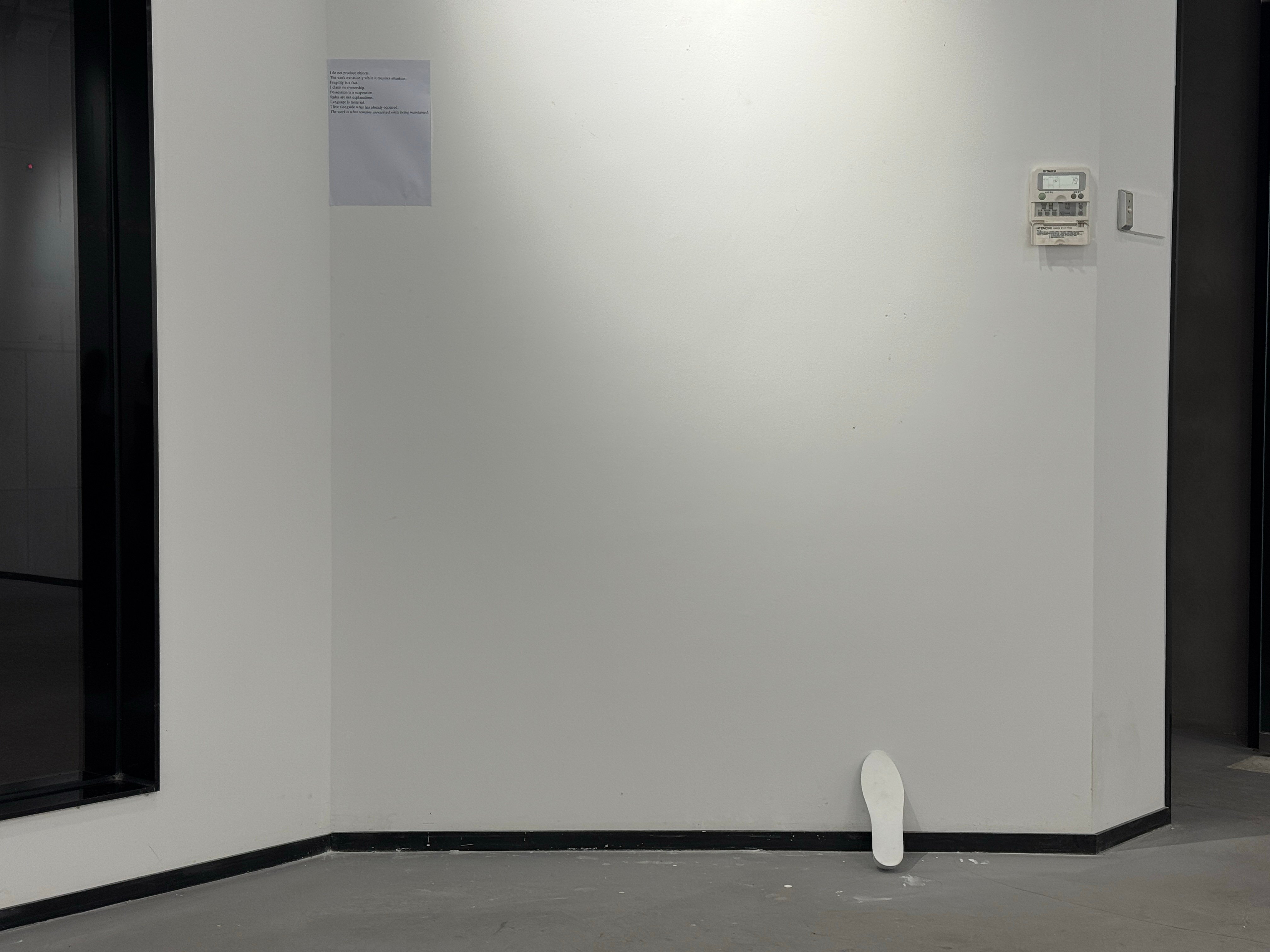
这种逻辑也延伸到了语言之中。by 包含一组以纸本形式呈现的协议、文件、说明、指令、评分与操作性文本。它们并不作为解释性标签存在,也不是为了稳定观看者的理解。它们属于与雕塑作品相同的材料场域。在这里,一份“协议”之所以重要,并不是因为它传递了清晰性,而是因为它会被不断执行,直到它的清晰开始松动:直到矛盾浮现,权威减弱,语言自身也显露出疲态。从这个意义上说,这个展览并没有把 if 所击碎的句子重新修复回来;它是用一种程序替换了一个句子。它不宣称意义,它宣称方法。而在张继驰的工作中,这种方法从来都不是洁净的。它会累积残留,会留下边缘,会记录下自身的不充分。
因此,观看者的位置也被重新校准。观看者并不是被要求去破译一个隐藏的信息,或补完一则寓言;他们也并不处在作品之外,作为一个中立的观察者而存在。相反,他们被置入一个可见却不稳定的系统之中,成为其中的一个变量。距离、进入、遮挡、暴露,以及微小的移动与绕行,都会成为作品逻辑的一部分。展览所追问的,不只是观看者“看见了什么”,而是:观看者在参与之中,究竟也在维持什么。
这里不是出口。 L Gallery is pleased to present by, a new solo exhibition by Jichi Zhang, conceived as both a continuation and a recalibration of his previous exhibitions, am and if.
by, emerges after that collapse. If meaning cannot be relied upon to complete itself, what still operates? Not what the work is, and not what it means, but by what means it continues to hold.
by is a preposition: a minor grammatical device that binds action to method, effect to procedure, continuation to means. Zhang treats this term not as a linguistic curiosity but as a structural condition. In this exhibition, by names the smallest procedures through which a surface is kept intact, a gap remains manageable, and exposure is delayed without ever being fully repaired. The exhibition turns toward maintenance, but not as a virtue. It approaches maintenance as a contested relation: one that distributes visibility, prolongs function, and often conceals the terms of its own authority.
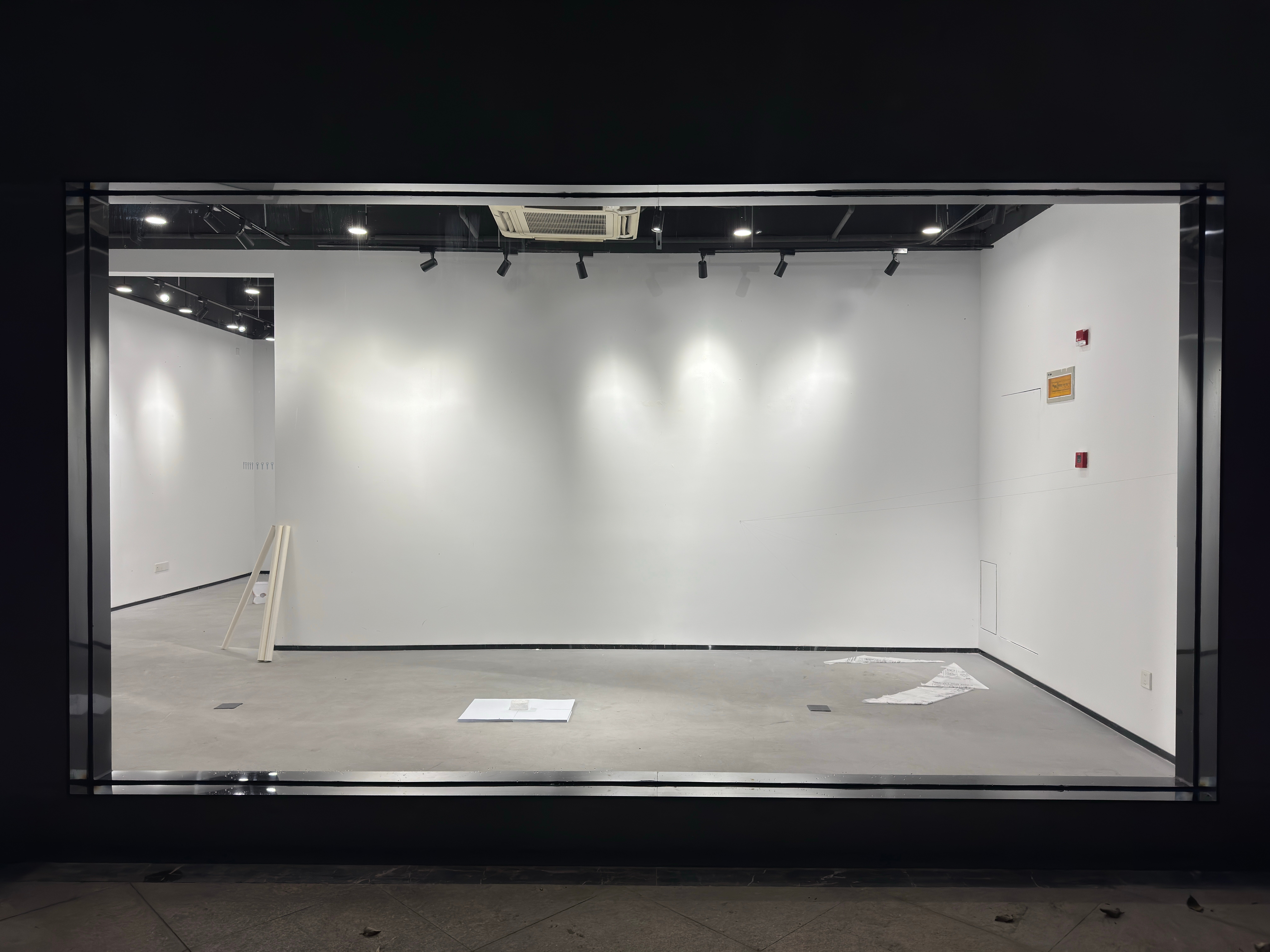
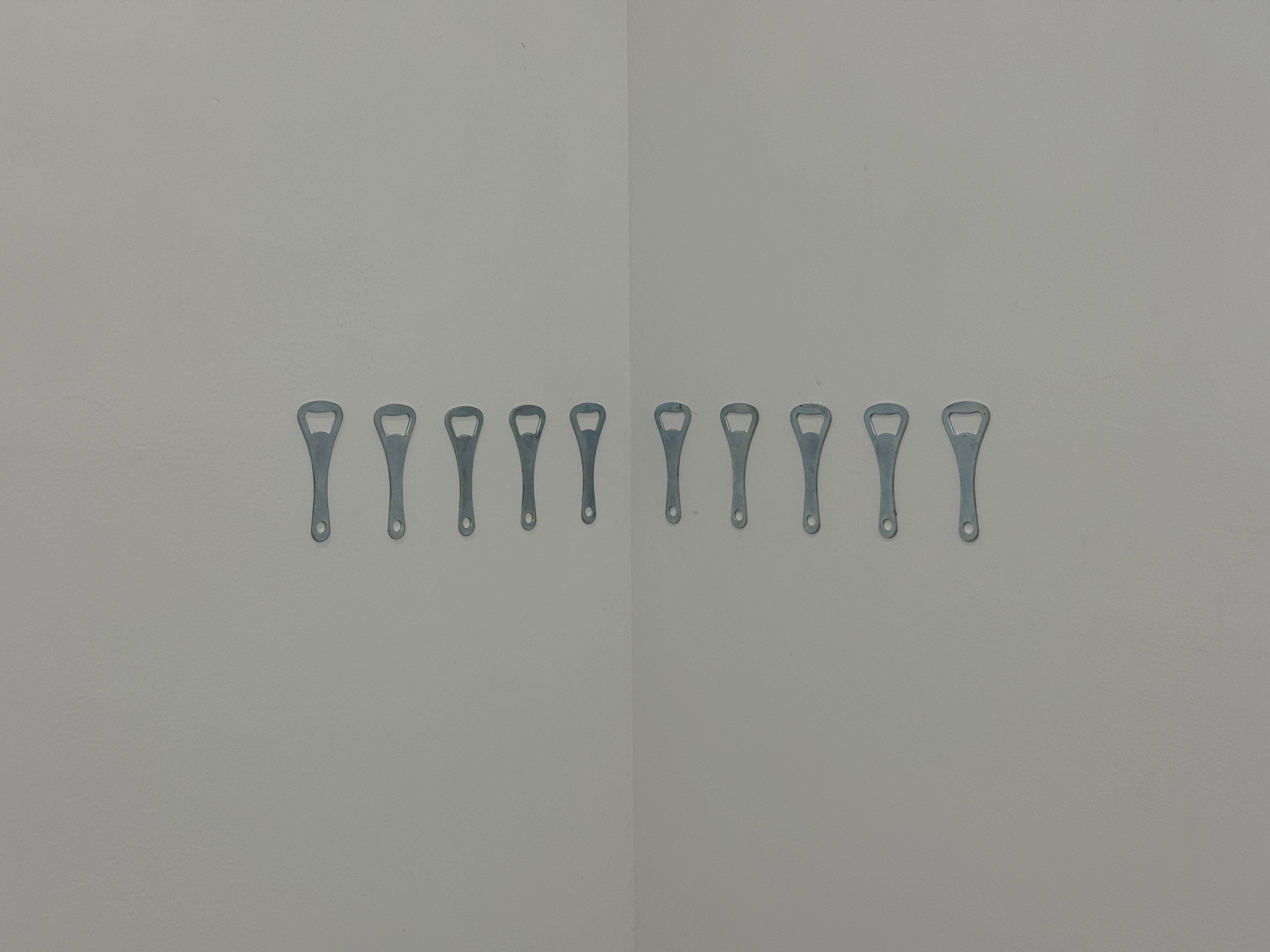
The works begin with a set of familiar but rarely examined operations drawn from building care, logistics, and everyday repair: filling, sealing, patching, taping, wrapping, labelling, and covering. These are gestures that usually remain in the background of the world, low-status acts that keep other things legible. Zhang isolates them and refuses their usual narrative of success. Here, maintenance does not appear as a neutral technical good, nor as a quietly noble form of care. It becomes visible as a structure that stabilises some things while postponing the consequences of instability elsewhere.
Care is not completion. The tape wrinkles, lifts, traps air, attracts dust, and leaves residue. The filler compresses, migrates, leaks, gathers, and settles unevenly. What should behave as closure behaves instead as evidence. Protection does not appear here as a solved problem, but as an unstable interface: a contact zone where adhesion is always close to failure, and where failure rarely arrives as spectacle. Instead, it emerges as a gradual loss of authority.
This emphasis on the interface is central to the exhibition. Zhang is less interested in the finished object than in the point where one material meets another, where a seam is made visible as a seam, where transparency stops appearing neutral and begins to look suspicious.
If am held becoming, and if held refusal, then by turns toward responsibility—but without any promise of redemption. It asks what it means to continue without stabilising, to protect without assuming protection is innocent, to maintain something while knowing maintenance may also prolong the very structure under question.
Zhang’s recent work has moved away from a broad anti-institutional posture toward a more precise inquiry into how structures actually operate: how they are upheld, by whom, at what cost, and through what small repeatable acts. In this sense, the exhibition is not about maintenance as a theme, but about maintenance as a mode of power. What is being protected? Who benefits from the continuation of this structure? What is being allowed to decay under the appearance of care? And what remains unexamined precisely because it looks like maintenance rather than control?
The works are also shaped by a condition of provisionality that runs through Zhang’s recent practice more broadly. Questions of mobility, temporary occupation, conditional access, and unstable belonging inform the exhibition’s sense that nothing here is fully secured. Surfaces are held rather than resolved; conditions are sustained rather than completed. This does not produce a dramaticrhetoric of precarity. Instead, it produces a low-energy discipline: a way of working with the least force necessary to keep something in circulation. The exhibition does not seek heroism. It seeks the minimum intervention required to prevent collapse for one more moment.
This logic extends into language. by includes a library of printed protocols, documents, instructions, scores, and operational texts presented on paper. These do not function as explanatory captions and are not there to stabilise interpretation. They belong to the same material field as the sculptural works. A protocol matters here not because it delivers clarity, but because it is executed until its clarity begins to loosen: until contradiction surfaces, authority weakens, and language itself shows fatigue. In this sense, the exhibition does not restore the sentence that if shattered. It replaces a sentence with a procedure. It does not claim meaning; it claims method. And the method, in Zhang’s work, is never clean. It accumulates residue. It leaves edges. It keeps a record of its own insufficiency.
The position of the viewer is therefore also recalibrated. The viewer is not asked to decode a hidden message or complete an allegory. Nor are they placed outside the work as a neutral observer. Instead, they are positioned as a variable within a visible but unstable system. Distance, access, obstruction, exposure, and minor acts of navigation become part of the work’s logic. The exhibition asks not simply what the viewer sees, but what the viewer sustains by participating.
This is not an exit.